
From Medical Student to Academic Clinical Fellow in Obstetrics & Gynaecology: What I Wish I Knew Earlier...
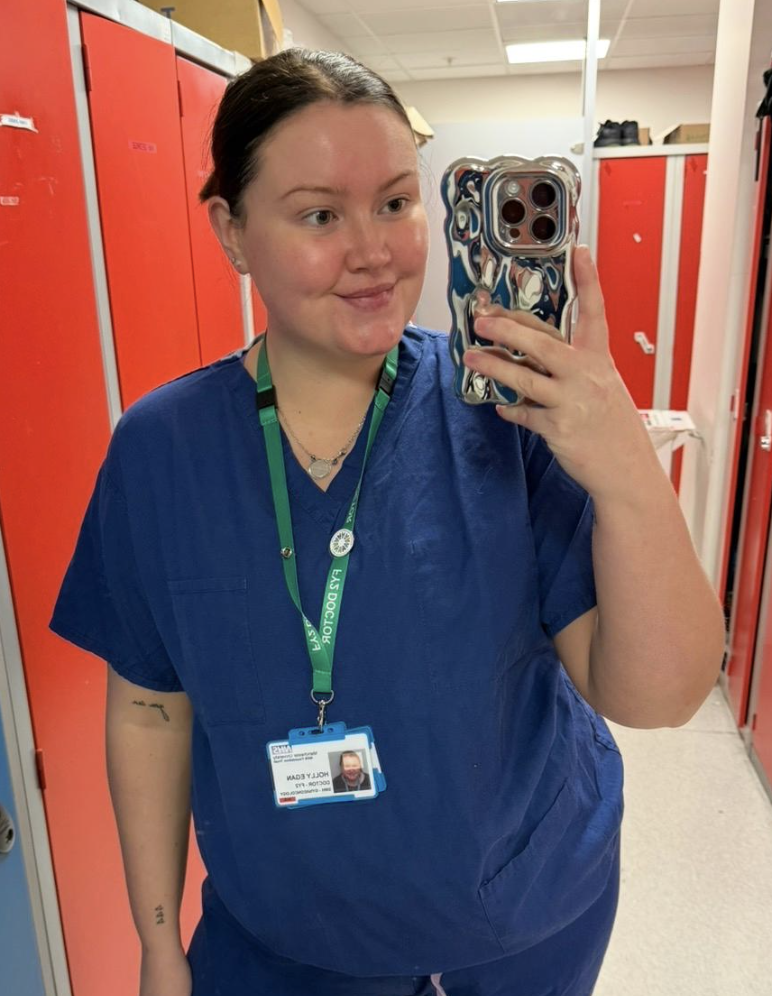
Dr Holly Egan has an interest in oncology, women’s health, and academic research, and this year received her two top choice offers to be an Academic Clinical Fellow (ACF). Dr Egan has presented her work at international conferences and has previously been awarded an RCR Research Fellowship, as well as the 2024 RCR Clinical Oncology Undergraduate Research Award. Dr Egan has recently completed a research fellowship with Oregon Health & Science University in the United States and starts her ACF this August.
In this piece, Dr Egan outlines her path from limited early exposure to academia to starting an ACF in Obstetrics and Gynaecology this August. She describes how getting involved in research during medical school, alongside teaching and mentorship, gradually built her interest in academic medicine.
The article explains the role of the Specialised Foundation Programme (SFP) in providing protected time for research and skills development, and how this experience informed her decision to apply for an ACF. It also covers what is realistically expected for an ACF application, how to approach building an academic portfolio, and why sustained interest and follow-through matter more than volume of achievements.
If you had asked me at medical school what an Academic Clinical Fellowship (ACF) was, I probably would have given you a vague answer involving “research and teaching.” It wasn’t until much later that I truly understood what an academic career could look like, and more importantly, that it was something I could realistically pursue.
Read about the ACF here: https://www.nihr.ac.uk/career-development/research-career-funding-programmes/predoctoral/academic-clinical-fellowship
Now, as an Academic Foundation Doctor starting an ACF in Obstetrics & Gynaecology very soon, I wanted to share my journey - not because it was perfect, but because I wish I had known some things beforehand. If you’re a medical student even vaguely curious about academia, this is for you…
The Moment It Clicked
Like many students, my early exposure to medicine was almost entirely clinical. Research felt distant - something “other people” did and something that I maybe wasn’t that interested in despite having done a BSc in Biomedical Sciences before medical school. Things changed in 3 rd year when I got involved in a research project that flipped my plans for my future career on its head
completely.
The process of getting started in research wasn’t glamorous. There were long hours, confusing papers, and moments where I had no idea what I was doing. But I loved the process of asking questions, exploring uncertainty, and contributing (even in a small way) to something bigger. That experience planted a seed: you don’t have to have it all figured out!
One of the biggest misconceptions is that you need a clear academic plan early on. You don’t. What matters more is curiosity and consistency.
During medical school, I:
Got involved in small research projects
Said yes to opportunities (even when I felt underqualified)
Tried teaching and discovered I genuinely enjoyed it
Built relationships with mentors who guided me
None of this was strategic at the time - but it added up.

What is the SFP and why I did I apply?
During 4th year, I came across the Specialised Foundation Programme (SFP). For anyone unfamiliar, the SFP/AFP is a foundation training pathway that includes dedicated time for academic development - whether that’s research, teaching, or leadership.
Read about the SFP here: https://foundationprogramme.nhs.uk/programmes/2-year-foundation-programme/ukfp/specialised-foundation-programmes/
What appealed to me most was the opportunity to properly explore academia in a structured way, without having to fully commit to it long-term, and with protected time (meaning no on-calls).
I didn’t apply because I had everything figured out. I applied because:
I was curious about research
I had enjoyed my previous projects
I wanted time to develop academic skills
And honestly - it felt like an opportunity I didn’t want to miss.
My experience on the SFP
The SFP gave me something that’s very hard to find in standard clinical training: protected time to think, explore, and create.
During my academic placement, I was able to:
Get really involved in a research project with my full time dedicated to this over a 4-month period
Build on my understanding of academic medicine
Develop skills in writing, presenting, and critical appraisal
Work with supervisors who were genuinely invested in my development
Plus, I managed to talk my way into a Research Fellowship in the USA for a month! This allowed me to develop skills in the lab and attend the Early Detection of Cancer Conference to connect with academics internationally.

Most importantly though, it helped me realise that academia was something I wanted to pursue further and that an Academic Clinical Fellowship could be for me...
Building an academic portfolio (without burning out)
There’s often pressure to “tick boxes” with academia - publications, presentations, prizes. While these do matter, I think the approach is more important than the checklist. And burnout is not necessary!
What helped me most was:
Choosing topics I genuinely cared about (this makes the work sustainable and enjoyable)
Working with supportive supervisors (this is underrated)
Following projects through to completion - even small ones
You don’t need dozens of publications. Or any (sometimes). Just a few meaningful experiences, done well, go a long way.
Why Obstetrics & Gynaecology?
My interest in O&G developed gradually. I was drawn to:
The mix of medicine, surgery and oncology
The ability to support women through significant life events (from the best day in their life for some to the worse for others)
The scope for impactful research -particularly in areas like early cancer detection
Academia in O&G felt especially exciting because there are still so many unanswered questions.
Read more about a career in O&G here: https://www.rcog.org.uk/careers-and-training/starting-your-og-career/
The ACF Application: what actually matters

Applying for an ACF can feel daunting, but at its core, selectors are looking for potential.
From my experience, key things that made a difference were:
Demonstrating commitment to the specialty
Showing genuine interest in research (not just CV-building) and showing that you have continued with your research
Being able to talk confidently about your work
Having a clear (but flexible) vision for your future
Importantly, you don’t need to have everything mapped out. You just need to show that you’re engaged, motivated, and willing to learn.
Guidance on the application can be found here: https://www.nihr.ac.uk/2026-academic-clinical-fellowships-medicine-guidance-recruitment-and-appointment
Things I wish I knew earlier
If I could go back and give myself advice in medical school, it would be:
It’s okay to start small - your first project doesn’t have to be groundbreaking
Rejection is part of the process (papers, posters, applications - all of it)
Publications don’t equal success – in fact I only had my 1 st paper published in FY1
Mentorship matters more than prestige
You are more capable than you think
Perhaps most importantly: you don’t need to be “exceptional” to pursue academia. You just need to start.
Final thoughts
An academic career isn’t the only path and it’s not for everyone. But if you enjoy asking questions, challenging existing knowledge, and contributing to change, it’s worth exploring. Medical school is the perfect time to try things out. You don’t need to commit - just get involved, stay curious, and see where it takes you.
Because you might surprise yourself.
If you're a medical student thinking about academia and not sure where to start - that's completely normal. I was in exactly the same position not long ago and look at me now!
You can follow Dr Egan's journey on Linked In: https://www.linkedin.com/in/hollyegan/


Comments